woensdag 1 juni 2011

Lime ginger scallops, Ginger asparagus with cashews and Coconut 'panna cotta'


When I was invited for scallops and prawns- I couldn't have been happier- but I was also quite intrigued, since I have never before cooked or even eaten scallops! The host is a California 'girl' (she will love me for that- but really, we are all young at heart!) with Italian roots and also happens to be a great cook!
I offered to make dessert-, which was rather a challenge because it had to be a low-carb dish! One of the guests was following the infamous Atkins diet. What ? A low carb dessert where even fruit is taboo. How's that possible? I put my thinking cap on and came up with a panna cotta made with coconut milk and buttermilk. I used very little sugar- the barest minimum, and combined coconut milk with buttermilk for a nice fresh, light taste.
We had a brilliant evening. We did a bit of prep. work beforehand, the cooking itself was very quick and we were soon enjoying a delicious feast! It all seemed very luxurious! Scallops, prawns, asparagus, coconut milk....mmmm
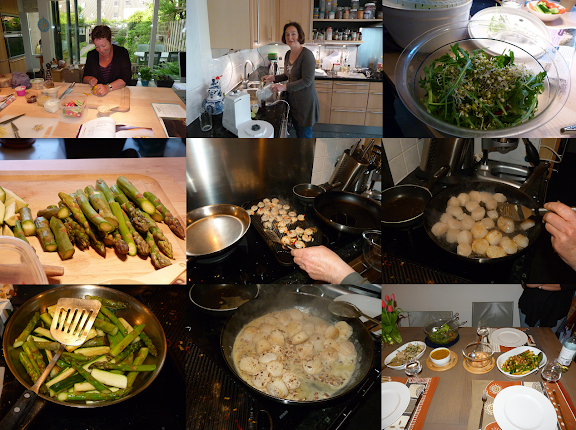

This was our menu:
Prawns, with a hot and spicy dipping sauce
Lime ginger scallop sauté (the recipe serves 2 so double up as you wish)
Ginger asparagus with cashews (serves 4)
Salad
Coconut 'panna cotta'

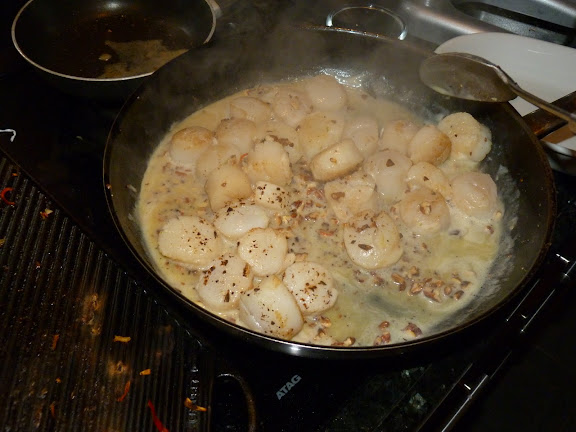
Lime ginger scallop sauté
For the Scallops (serves 2)
1 tablespoon olive oil
1 tablespoon unsalted butter
1 pound sea scallops, patted dry
3 tablespoons fresh lime juice
4 tablespoons Lime Ginger Butter (recipe follows), chilled
1/3 cup walnut halves, lightly toasted
Chopped fresh parsley, for garnish
For the Lime Ginger Butter
4 tablespoons (1/2 stick) unsalted butter, at room temperature
2 teaspoon grated lime zest
1 teaspoon ground ginger
1/2 teaspoon salt
Freshly ground black pepper, to taste
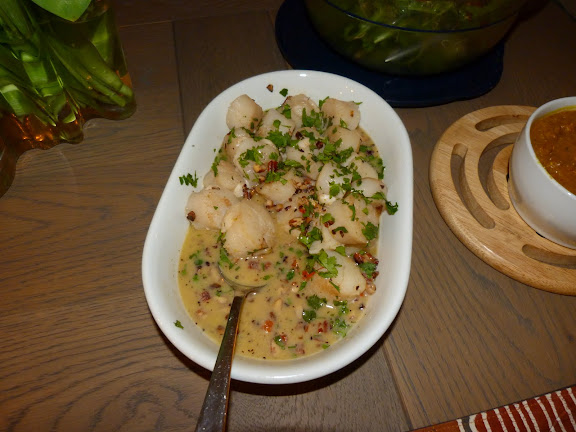

1. Heat the oil and butter in a large skillet over high heat. Add the scallops and stir until golden, about 2 minutes. Pour off the fat.
2. Stir in the lime juice and cook 1 minute. Lower the heat and stir in the Lime Ginger Butter 1 tablespoon at a time. Cook just until a thick sauce forms. Stir in the walnuts, sprinkle with parsley, and serve.
Lime Ginger Butter Stir all the ingredients together in a small bowl until smooth. Shape into a cylinder 2.5 inches in diameter, and wrap in foil or plastic wrap. Refrigerate until firm, about 1 hour.
Makes: About 5 tablespoons


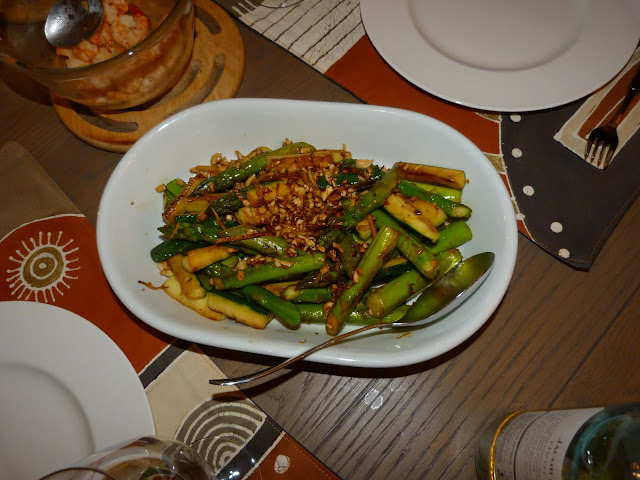
Ginger asparagus with cashews.


1 tablespoon peanut or safflower oil
1 pound asparagus about 16, halved
1/2 inch fresh ginger, peeled and cut into fine matchsticks
1/2 cup chopped cashews, toasted in a dry skillet
Grated zest of one unwaxed orange
1 tablespoon soy sauce
1 tablespoon sesame oil
Serves four
Heat the oil in a wok, add the asparagus and ginger and stir-fry for 4 minutes.
Add the cashews, orange zest, soy sauce and sesame oil and continue cooking for one minute. Transfer to warm plates and serve immediately.

We actually added some courgette, which also worked well.
This combined great with a lovely fresh salad and the prawns with was served with a delicious home-made spicy, dipping sauce. It was divine.

Coconut-buttermilk 'panna cotta'
Of course not a true 'panna cotta', which actually means'cooked cream', but a much lighter version of the Italian classic.
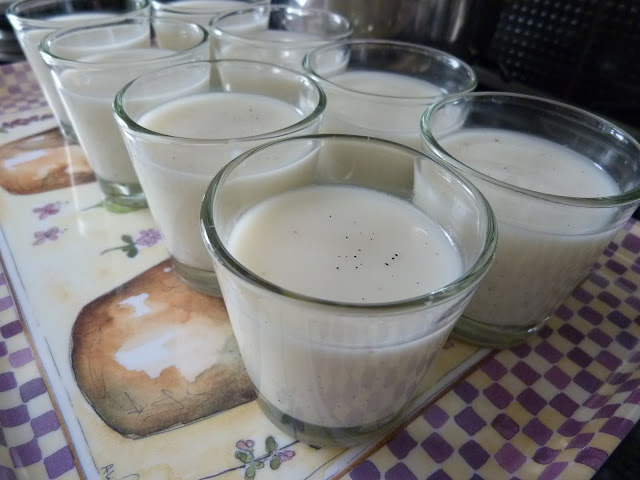

400ml coconut milk (I used Fair trade)
250ml buttermilk (I used Arla organic buttermilk)
30- 40gr palm sugar- the pale kind (30 is the barest minimun)
4 gelatine sheets
1 vanilla pod (I used one Indonesian vanilla)
3 tbsp desiccated coconut
1 tbsp brown sugar
optional sauce for serving see below.
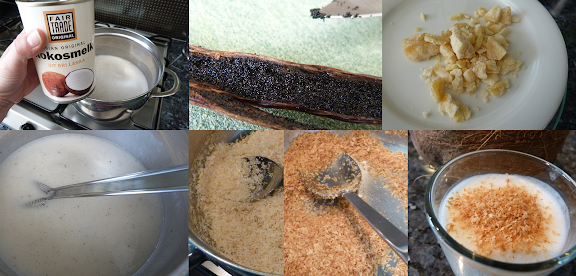


Heat the coconut milk in a pan. Add sugar and vanilla pod (scrape out the inside).
Do not boil; we don’t want to risk curdling the milk. Allow to ‘just’ reach simmering point. Let the vanilla seep for more flavour, I'm afraid I was out of time so to be fair I can't judge the quality of the Indonesian vanilla based on this dish.
Soak the gelatine in the buttermilk for 10 minutes.
Cool the coconut milk slightly, romove the pod and add the gelatine one at a time mixing (or whisking) thoroughly.
Add the buttermilk and stir well. Pour in the dishes. I made 8 small desserts.
Cool and place in the refrigerator for 3-4 hours.
Toast the coconut in a dry pan. Add brown sugar.
Sprinkle this mix over the 'panna cotta'.


For a bit of extra taste (for those not following the Atkins diet):
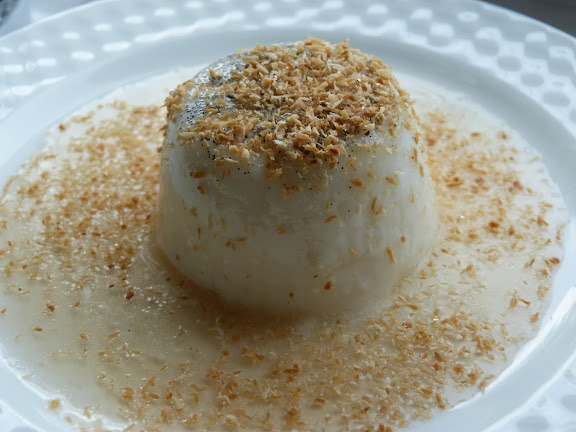
I thought the dessert was lacking somewhat- especially because I had keep the sweetness down. I dissolved 2 tbsp. sugar in a little boiling water, allowed to cool befire adding 2 tbsp. Malibu. This time I turned out the dessert, (by carefully running a knife around the edge and turn upside down)
Pour the Malibu mix over the dessert before sprinkling with coconut/sugar. Enjoy.

zondag 17 april 2011

The Globe Artichoke- getting to the heart of things


Everyone knows my love for inverted flowers (figs) now time for edible flower buds- artichokes.
These vegetables, or should we call them 'immature thistles' can seem quite intimidating- how one cooks and eats an artichoke is not at all obvious from its appearance. The truth is, they are actually quite easy, if rather time consuming, to prepare.
I tasted my first artichoke as a teenager, and I have been eating them sporadically ever since, getting my 'fix' whenever I feel the urge. During visits to Italy I eat them as often as possible, even be it as Pizza topping.
Due to its unusual appearance, an artichoke has certain wow factor. I served them to my children a few years ago when my husband was at work knowing he would not appreciate artichoke. They were very interested and amused by the content of their plates.
Of course preparing an artichoke is a little more time consuming than throwing a bunch of vegetables together in a stir-fry. Look at it as a labour of love. Underneath it's thorny exterior is a delicious soft and delicious centre- it’s heart. It has a delicate taste difficult to describe, a mix of avocado, asparagus and pea...?
A couple of weeks ago a friend gave me four artichokes. She asked me to cook them and write a post.
The best way to eat an artichoke is of course the simplest method. Cook it whole and peel away its petals one by one (dip them in melted butter, mayonnaise, hollandaise or vinaigrette) and scrape the leaves against your lower teeth until you reach your reward- its heart.
Artichokes can be roasted or grilled, though they tend to be less tender and moist. Alternatively, they can be stuffed and steamed. (Or finish off in the oven)
Preparation:
Artichokes discolour rapidly, if you're going to keep them for any length of time before cooking, soak in water with a couple of lemon slices.
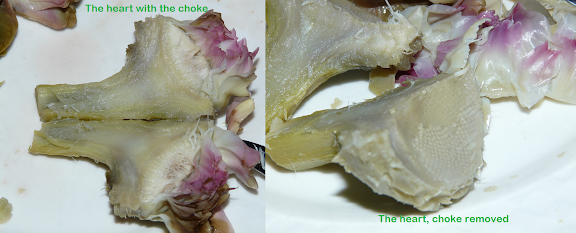
You can remove the hairy choke before or after cooking, I prefer afterwards.
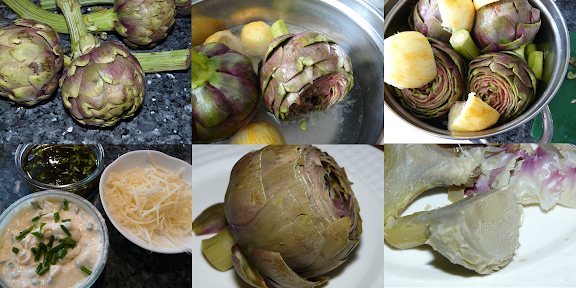
1. Soak the artichokes to clean thoroughly.
2. Slice about 2cm of the top off with a sharp knife.
3. Take a pair of scissors and remove the spiky ends.
4. Remove the inedible, smaller leaves off the base.
5. Leave a short stem on the artichoke. You can peel the remainder stem and cook it along with the artichokes. It is however more fibrous, some people discard it, but I do not like waste.
6. Rinse the artichokes and sprinkle or rub with lemon juice. (I used fresh lemon and placed this on top of the artichokes)

Basic cooking:
Place in a large saucepan stalk side down, with several cm of water, (add a little salt and sugar) and boil for 25 - 45 minutes depending on the size. (Mine were done in 30min)
Artichokes are ready when you can easily pull out a leaf.
Turn the artichokes and drain to remove any extra water and serve warm.
Pull off the outer petals one at a time and dip them in your sauce of choice. Turn the petal dip side down in your mouth and remove the flesh by scraping along your lower teeth. Discard the petal. Continue until all petals are removed. You are now left with a hairy 'choke' and the heart. The choke should be removed by cutting and scraping away. Cut the heart in pieces and continue dipping.

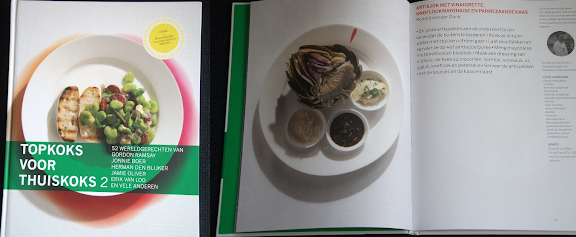
I rifled through my cookery books and found a classic artichoke recipe with a selection of dipping sauces. It was from the book Topkoks voor Thuiskoks 2. It is part of a serie of four books discussed here
I omitted the mashed potatoes.
The recipe is rather vague with no measurements, so it is up to you find what suits you taste. I was rather intrigued by the east meets west combination of balsamic vinegar and sambal.

Artichokes with vinaigrette, garlic mayonnaise and parmesan cheese- Ronald van der Donk
to serve four:
4 large artichokes
1 lemon
garlic, crushed
mayonnaise
chives, finely sliced
grated parmesan cheese
olive oil
balsamic vinegar
red wine vinegar
sambal
soy sauce
chopped onion
chopped shallot
chopped red onion
garlic, crushed
parsley, chopped
mashed potato

Cut the artichokes at the base and remove the outside leaves. Cook them in water with the lemon pieces until tender. (I removed the zest and used it in my main course)
Allow them to drain and serve them with mashed potato.
Mix the mayonnaise with the garlic and chives.
Make a dressing with the olive oil,the two types of vinegar, sambal, soy sauce, onion, shallot, garlic, and parsley.
Serve the artichokes with the dips and cheese.
Wine suggestions:
Viognier Lés Gres,
Vin de Pays d'Oc, 2006,
mild and ripe with white fruit,
delicate

I served as main course a Mediterranean mix of sausages, vegetables and couscous, adding the artichoke stalks at the end. As we were eating our appetiser, the couscous was soaking.
Hubby looked rather bemused- he was this time of the party. He stated that he had more on his plate than when he had started! It certainly works well as an appetiser- he was ready for the main course! He cannot understand why one would go to so much trouble when they are available in jars!
Artichokes are native to the Mediterranean region. My artichokes came from Italy- a friend is able to order them. They are quite a nutritional powerhouse, http://nutrition.about.com/od/fruitsandvegetables/p/artichokes.htm so as long as you do not overdo the fat level in the dips they should be healthy too!

Unusual facts:
Artichoke lover: Marilyn Monroe, Norma Jean at the time, was crowned Castroville's (California, USA) first Artichoke Queen in 1947. The city itself is known as the "Artichoke Center of the World"
Wine killers: Artichoke has the peculiar property of altering the taste buds in most people .This natural chemical change causes food and drink consumed after artichokes to taste sweeter- ruining the true flavour of your chosen wine! This can be easily be taken into consideration by selecting an acidic wine. This is only true of fresh artichoke and it does not apply to the jars.

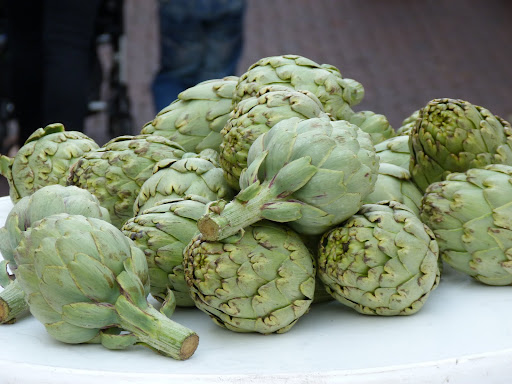
Artichokes were in abundance at the Leiden market two weeks ago. It was a beautiful day, the first real warm sunshine in Holland this year. The miss match of winter coats and short skirts were a result of this period of transition. The terraces were filling, the market traders were busy and smiling, love was certainly in the air and on the canal you could even spot the odd boat passing by.

BTW It was me wearing the winter coat ;-) and very much regretting it!
Ending on a rather thoughtful note- what was that first person thinking who decided to eat this thorny creature? And how sad that artichokes are never allowed to reach their full potential...life is strange.

dinsdag 29 maart 2011

Souvenirs from Java / Bali, Indonesia


I guess the perfect holiday is to relax and explore the beautiful country you are visiting. Finding a balance is very important to the success of a holiday. Our latest holiday, while being very enjoyable, left us with the feeling of needing a holiday to recover! OK jetlag was a major factor, crossing 7 time zones really has a negative effect on one's body, and the fact that we had two stops also took its toll.
We took a round trip starting in Jakarta, Java ending in Sanur, Bali. We have seen and experienced many things- with increasingly widened eyes. Travel is certainly a teacher- our knowledge and awareness considerably expands with each new holiday destination. A review will follow.
We usually favour round trips, ending with a couple of relaxation days on the beach but this time it was not enough. It was a case of planes, trains, buses, a ferry and a motorbike! I hardly had time to sunbathe let alone visit the local supermarket!
In a quick dash I raced around a supermarket and grabbed just a couple of cooking souvenirs:

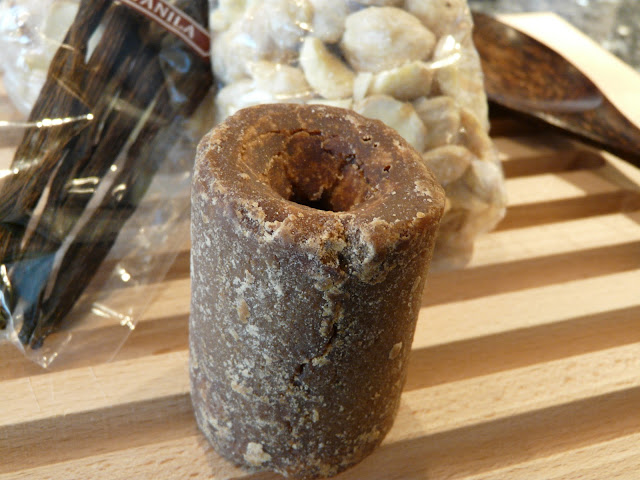
I love fresh vanilla and since Indonesia is the second largest producer I couldn't resist buying a packet. It looks pretty impressive, the pods are long and they certainly feel good, now I only have to sample the quality and from what I've been told, it is of particularly high standard.
I coudn't resist palm sugar / gula melaka, after seeing it being collected from the trees. This will be explained in the review. It seems darker in colour than the Thai palm sugar. It certainly tastes heavenly. Shame I couldn't bring more but I knew I was pushing the weight limit (next time I am going to reduce the clothes I take by half! Who needs four bikini's? Three cardigans, four pairs of shoes…)
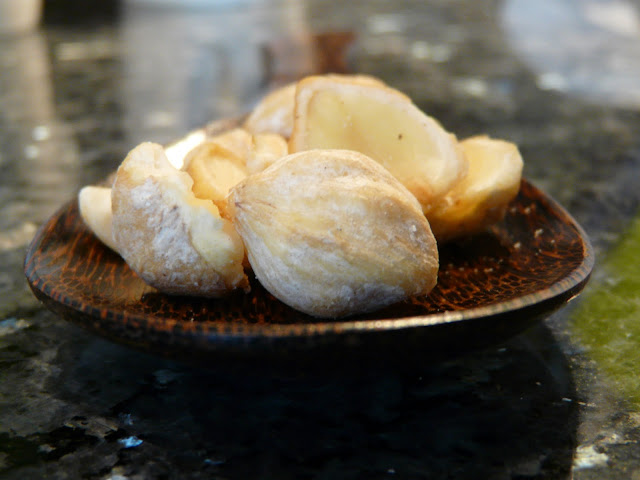
Luckily I had already purchased kemiri nuts (candlenuts) from the local market. These nuts have a high oil content, they are used mostly ground as a thickening and stabilising agent in curries and taste/ look similar to the macadamia nut.


They are mildly toxic however, if eaten raw. Various parts, bark/leaves/oil have been used in traditional medicine in most of the areas where it is native. To name two: The oil produced had many beauty properties, ie hair conditioner. It can also be used a laxative.
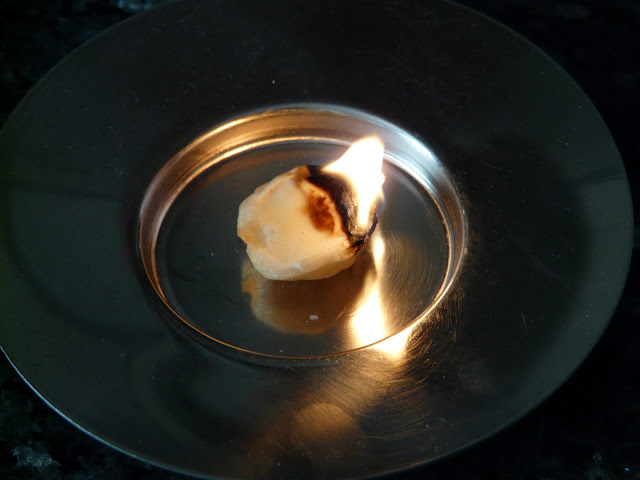
The candlenut, due to its high oil content, was used as a measure of time. Each nut burns for 15minutes. I tried it!


While coffee is available is numerous types and enticing packaging we did not appreciate the Indonesian coffee and left it on the supermarket shelf!
Oh yes, a bottle of Pepsi Blue jumped into the trolley, just for novelty value. Apparently, it was an enormous flop in the US (2002-2004) and I am not surprised at all- it tastes awful!
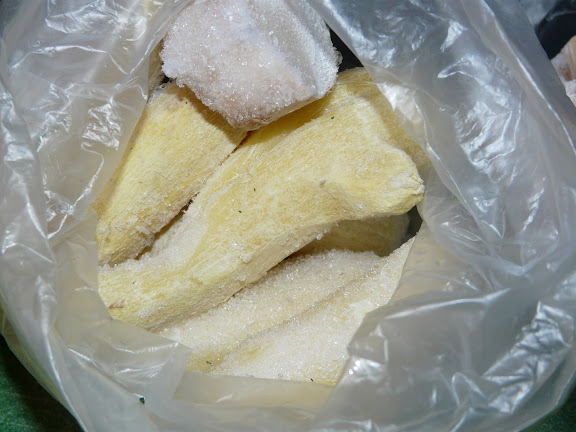
Also some delicious Cassave crisps- well everyone likes to snack- even I do!


Although I was overall rather disappointed in the Indonesian cuisine/ restaurants, I was inspired by one or two dishes. Thailand/ Greece remains jointly at nr 1/2.
Everyone must be familiar with Sambal and know its potency, but Sambal does not need to be overly hot. One of my best holiday meals was a dish served with two different types of Sambal. One was moderately hot, the other mild.
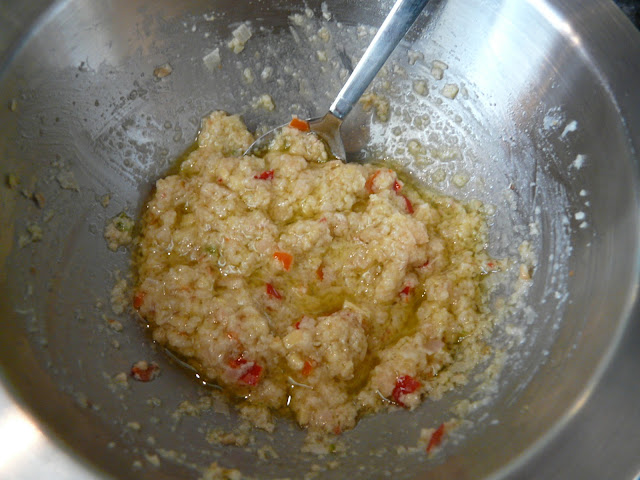
Today I tried to reproduce it by what I tasted. It was pretty damn good. Look it as being a kind of Asian pesto. You could of course use this same paste as a basic to cook with in a chicken/ shrimp dish.


Lemongrass Sambal- Asian Pesto:
approx 6 kemiri / candlenuts
3 rawit peppers (1 green, 2 red) with or without seeds
1 lemongrass*, finely chopped (fresh) or pureed
1 small piece fresh galangal*
1 small piece fresh ginger*
1/4 tsp salt
small piece palm sugar
lime juice
olive oil
Of course you could add shallot, trassi/shrimp paste, garlic….whatever you fancy.

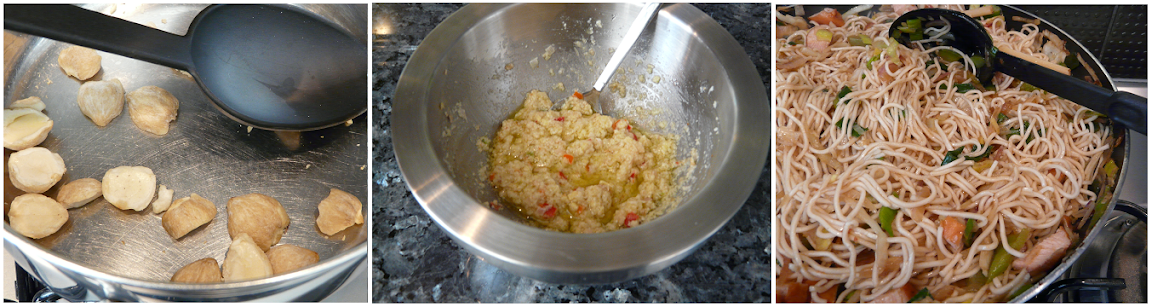
Gently dry roast the candle nuts for a few minutes.
Finely chop the inner part of the lemongrass discarding the dry outer leaves. Finely chop the galangal, ginger and peppers.
Grind the toasted nuts in the mortar and pestle, add the galangal, ginger, peppers, salt and sugar and continue to blend, allowing all the juices to come out of the peppers.
Add a tbsp limejuice and olive oil. Add more olive oil until the required texture has been reached. Taste and add more lime/ salt/ sugar to personal taste.
I served mine on the side with noodles but it is equally delicious for dipping.


* Of course you can buy jars of galangal and lemongrass and that works fine but I prefer to use 'fresh', or frozen in my case. I buy sticks of lemongrass, galangal and ginger from the Toko. It can successfully be stored in the freezer until use. (You can actually buy lemongrass in the freezer section at the Toko) lemongrass need no special instructions just pop it in the freezer and take out as required. As for the galangal and ginger, I remove the skin and chop in varying sized pieces and store in a plastic bag/ container. It can be removed and directly chopped while still frozen, and used immediately.

maandag 17 januari 2011

Starter: Marinated salmon tartar with avocado and lettuce


This starter is one of the 'world-class recipes' taken from the cookery book ‘Topkoks voor Thuiskoks No 3.' 'Top cooks for Home cooks 3'
The cookery book contains fifty two favourite recipes provided by fifty two national and international chefs. Each contributor was asked to donate a recipe suitable for the home cook.
It is however not just a cookbook; TNT Post partnered with WTP* (World Food programme) to realise this book and all proceeds go to WFP towards providing nourishing meals for schoolchildren. The raised money of each copy sold will enable 40 children to receive a nutritious meal at school in Malawi.
At 9,95euro, it makes an ideal gift. This is the third edition; the fourth is now available. I understand availability in the English language is very limited.

It is a beautifully illustrated cookbook with a selection of starter, main courses and desserts- to provide inspiration every week, for a whole year!
The "topkoks' / 'Top Chefs' include: Ferran Adrià- restaurant El Bulli, Spain, Herman den Blijker-tv chef- Herrie in de keuken, The Netherlands, Filip Claeys- Restaurant De Jonkman, Belgium, Ramon Beuk- TV chef 'Born2cook' The Netherlands, Sergio Herman- Restaurant Oud Sluis, The Netherlands.

I actually made this dish at a 'Drive and Cooking' event organised by Lexus. It was a perfect afternoon out- a combination of test driving Lexus Hybrid cars and cooking. The workshop took place at de Kookerij in Noordwijkerhout. The cars were impressive- and fast! The cooking part was also very well organised, the location beautiful- modern and well equipped. Part of the enjoyment was eating the food we prepared.
We didn't buy the car but ended up as proud owners of the cookbook!

de Kookerij in Noordwijkerhout


My Christmas dinner this year wasn't exactly traditional. I opted for the salmon tartar as starter.
The recipe we put together differed slightly to the one in the book, as does the tartar we made at the workshop, but it was quite delicious. The salmon needs to be very fresh since it is served raw. You could of course substitute with smoked salmon.


Marinated salmon tartar with avocado and lettuce- donated by Steffen Henssler, Restaurant ONO, Germany
Ingredients- 4 person
150gr salmon filet, cubed in small
1/2 ripe avocado, chopped finely
1 spring onion
2 el coriander, finely chopped
2 tsp chili sauce
1 - 2 tbsp olive oil
a dash of lime juice
1/2 iceberg lettuce
2 lemons, squeezed
2 oranges, squeezed
100g cream
100g crème fraiche
4 tbsp sugar

1 Mix the salmon with the avocado, spring onion and the coriander. Season with salt and pepper. Add the chili sauce, the olive oil and the lime juice and mix carefully.
2 Wash the lettuce, dry in a salad spinner and cut in bite size pieces. Mix the lemon and orange juice together. Add the cream and Crème fraiche. Season with salt and sugar.
Pour over the lettuce, toss and serve with the salmon tartar.


Of course I had to tweak. I reduced the sugar in the dressing- the quantity is also very generous, you could easily half the dressing ingredients. If you follow the instructions, you will make a kind of lettuce 'coleslaw'. I used mixed salad leaves, drizzled the dressing and left the jug on the table so everyone could help themselves. At the workshop we served the tartar with reconstituted sun dried tomato that were incredible!
I also have two non-fish eaters here, so it was necessary to improvise; I made two smoked chicken tartars with roughly the same ingredients, but used red onion instead of spring onion and added chopped tomatoes.

Smoked chicken tartar

It was Christmas so I had promised not to spend an awful lot of time shooting photo's! It was also quite chaotic in the kitchen, so the tartar is probably not as pretty as it could be, but it tasted good!
Salmon Tartar was not just on our Christmas menu, fellow Blogger Claudia had her own version.

* The World Food Programme (WFP) is the food aid branch of the United Nations, and the world's largest humanitarian organization addressing hunger worldwide. WFP provides food, on average, to 90 million people per year, 58 million of whom are children. (source: wikipedia)

Another recipe here.

zaterdag 15 januari 2011

Zaatah, a tasty dip made with sesame seeds and Samak:


A couple of week ago a friend told me she had made one of my recipes- and she laughed, saying "well I thought it was a recipe but when I got started it was a bit of this..., approx so much of that..., sugar to taste...!" Yes, that sounds about right.
I regard recipes purely as indications- you must use your instincts to guide you to fill in the blanks.
Take tea (or coffee) for example- something so simple but how many different ways can you serve it?
With milk and sugar, black no sugar, black one sugar, black two sugars, with milk no sugar, with milk one sugar, with milk two sugars, with milk and one sweetener........
It is a question of personal preference. However, one thing is sure- everyone knows exactly how they like their tea! (milk, no sugar thank you)
As I have said before: I don't often measure ingredients but work to 'feel', a pinch of this and a handful of that. Often salt and pepper is added to taste: I firmly believe that this should apply to many other ingredients. Everyone’s taste buds are different and can tolerate and/ or desire a lesser or higher degree of spiciness or sweetness. While I am guilty of spicing things up, I often reduce the amount of sugar. (OK baking is an exact science and a cake recipe a scientific formula that one should adhere to for good results.)
I dare you- the next time you plan to follow a recipe, be flexible, and think: how could I improve this to suit my own taste buds. Proceed with ‘feel’, make a substitution or two or add less sugar. These days we call it 'tweaking'. Everyone should be doing it- without any feelings of guilt! Actually tweaking is handy, you not only match your personal taste but also your pantry!
It is all very much a matter of taste.
This of course can apply to many aspects of everyday life, take the latest fashion- you surely wouldn't wear something just because it's the ‘in thing ‘, would you? You would first try it on and see if it is 'you'. You would then pick out the colour that is kind to your complexion. You learn to choose the kind of clothes to flatter you own figure.
A television must be adjusted to your personal preference, brightness, colour, sharpness, contrast- who wants to watch someone looking like a lobster? Some people do...you would be surprised!

You do have to know where to start, an idea or some ingredients. You may get inspiration from cookbooks, internet, magazines or from just starting to cook.
This is one of the reasons I started writing a blog. I have made up so many dishes in my time but because previously, I never made written notes I had difficulty reproducing my 'masterpieces!'
If a finished dish is amazing, it is a shame to have to work on a trial and error basis to recreate the same dish because I no longer could remember what I had used!
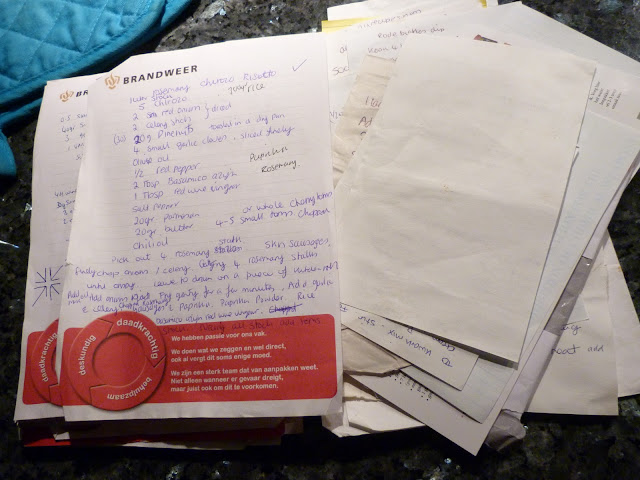
Sometimes not sharing a recipe is a grave crime! I therefore started taking notes- and because my little bundle of notes is mostly illegible, (a scrambled mix of Dutch and English) I decided to begin a blog.

I hope to inspire others with my enthusiasm.
It looks like I have results- instead of opening a bottle of mulled wine my friend made it herself to her own taste, and by all accounts it was pretty damn good. recipe

A good place to start is by making your own dressings or dips.
This is a dip I came across and I think it is pretty good.
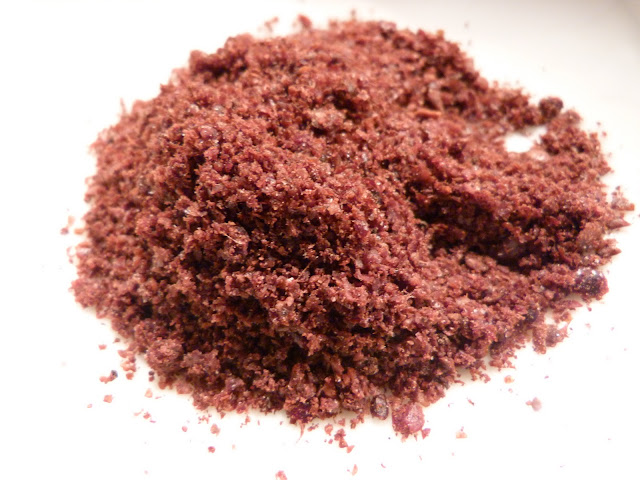
For quite a while now, I have had a packet of Sumac / Sumak/ Sumach / Sumaq in my spice cupboard- haha the world becomes a smaller place as my herb and spice collection expand!

Sumak? I didn't quite know what to do with it. I bought it purely out of curiosity. Looking at the packet, I could see it originated in Turkey. The colour is red but not spicy hot as one usually associates with red colouring. The taste was very unusual, acidic, tart like lemon. Although the best before date was not yet exceeded I decide to do some research.
It is a Middle Eastern spice, derived from red berries, hence the colour, from the shrub Rhus Coriaria. The small-ripened fruits are dried and ground to make Sumak.
It is used as a condiment and can be sprinkled over many dishes, basically anything you might squeeze lemon juice over. Salads, rice, chicken, fish, kebab.

I ended up making my own Zaatah, which includes Sumak as an ingredient. It is a blend of seasoning that can be bought 'mixed' or you can make it yourself.. Zaatar comprises of herbs (Thyme/ marjoram or oregano), sesame seeds, salt, pepper and sumak.
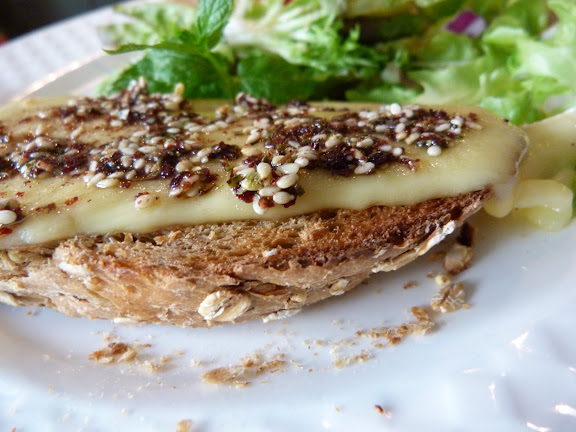
It can be sprinkled over foods, or made into a dip with yohurt or olive oil. Or served the traditional way; simply dip your pita (or any flatbread) in olive oil and then in the Zaatah mix.

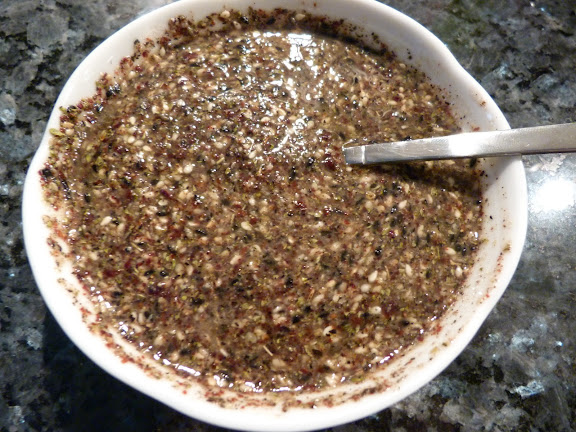
Zaatah blended with a little olive oil


Zaatah like Sumak has many spelling variations include: Zather, Zatar, Zahtar Za'atar, Zartar Zaartar to name just a few!
But I certainly plan to try the Egyptian variant called Dukka/ Du'a / Dukkah.
I don’t recall having Dukka in Egypt!
Dukka is primarily made with corriander and also contains roasted sesame seeds, a variety of nuts (pistachio, almond, cashew, walnuts, hazelnut, Macadamia or Brazil nuts) a little ground chilli, salt, pepper and Sumak. Other variations may include cumin, cinnamon, sunflower/pumpkin seeds, fennel or even coconut. I can't wait to try lots of flavour combinations!

I have made Zaatah a couple of times. I adore it.
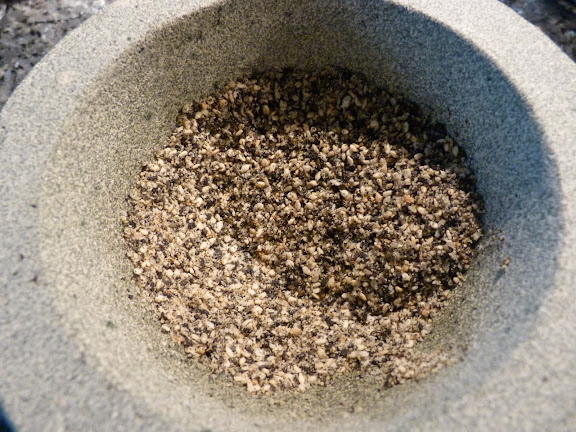
The first time I kept the sesame seeds whole but the second time I bashed them around in the mortar and pestle, which improved the flavour.

I also added some Tahin / Tahini (sesame paste).
You can also vary by using part (1/2) black sesame seeds as I did. They are available at the oriental supermarket.

To this particular dip I added tahini and black sesame seeds.


Zaatah Dip
sesame seeds
oregano or thyme, dried (or a mix)
sumak
pinch salt and pepper
olive oil

Dry roast in a pan (or toast) the sesame seeds, roughly bash them in a mortar and pestle (or pulse in a grinder)
Start off with equal amounts of sesame seeds/ herbs/ and sumak, add a pinch of salt and a little black pepper.
Taste and adjust until you get the taste you like!
Enjoy!

woensdag 12 januari 2011

What to do with a tin of unsweetened chestnut puree:


After a little break- and don't think for one moment I haven't been eating- in fact I have been eating, drinking, as well as being my normal jolly self during the festive period. It's important to keep smiling- no matter what life dishes out. And to keep cooking. I cook when I am happy, I cook when I am sad. It relaxes me if I am stressed. It is the stability in my life.
I hope to get back on track with one or two postings in the next few days. I have lots of notes, photo's and now just need to find the time. Coming up: salmon tartare, Panforte (Italian cake), truffle risotto, cheats Christmas pudding. But for now Chestnut soup.
For a whole year (since Christmas 2009 to be exact) I have had a tin can of chestnut puree with no plans to use it. OK the date did not expire for some time to come but who wants to be left sitting on the shelf! Anyway how long should you have a product taking up precious space in an already overfull kitchen cupboard?
When I have leftovers I often opt for soup This occasion it was no different.

I made this soup in the week coming up to Christmas. The Chestnut puree was the Clement Faugier kind- the unsweetened one. The snow was on the ground and the scene was set.
It is a festive soup with an earthy wholesome taste.
I was inspired by the Chestnut and goats cheese soup I ate in a restaurant in Amsterdam last year and I wanted to replicate it. It will be no surprise to hear I ended up going my own way. It is quite unusual, but none the less quite delicious.
Here is what I came up with:
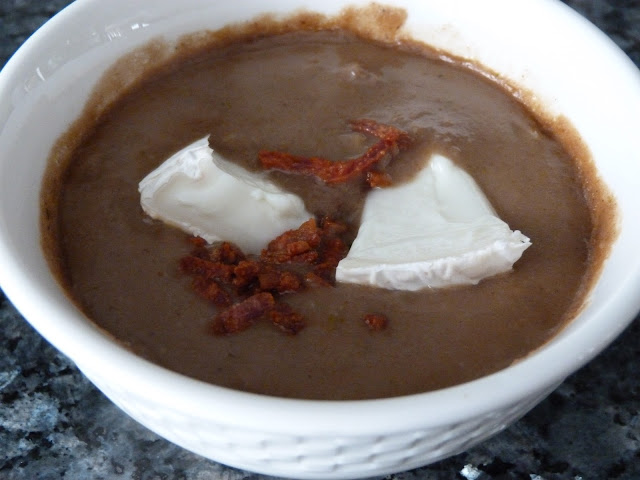
Chestnut soup with goats cheese:
1 tin pureed chestnut ( 439gr)
oil for frying
2 onions, chopped
2 potatoes, diced
2 cloves garlic, crushed
2-3 sticks celery (you can also use the green tops)
100ml evaporated milk (I used ‘koffie melk’)
approx 11 chestnut mushrooms
5cm piece galangal, finely chopped (or tinned)
5cm piece ginger, finely chopped (or use ground)
1 tbsp cumin
1 tbsp coriander, ground
chicken stock cube
knob of butter
120gr goats cheese & crispy bacon
2 cans water (volume of the tin can)
Serves 4-6


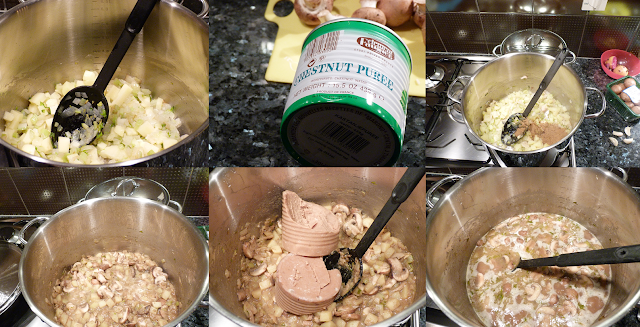
Heat the oil and fry the onion and celery. Add the ground spices, the roots, garlic, potato and mushrooms. When it starts sticking add a little of the water. Cook until tender.
Add the chestnut puree and remaining water, stock cube, and evaporated milk and bring up to the boil. Mash or puree as desired. Adjust the seasoning with salt and pepper. Add a large knob of butter.
Because the chestnut is quite solid it does remain together which results in the occasional mouthful of chestnut taste which certainly adds to ones enjoyment, bringing out the flavour.
Serve with goats cheese and crispy bacon.

maandag 13 december 2010

Cider and cheese soup / Mulled cider

This is another double blog- perhaps it reflects my personality quite well- easily side-tracked?
I also had to laugh at this blog, there I was feeling a bit overindulged- and came up with a boozy, creamy soup and some mulled cider- is it the Nigella in me?! Well the two recipes do share a common denominator- CIDER.

If you didn't realise already I love good food and drink- but believe me too much of a good think can be bad. In fact it can be very bad leaving one very worse for wear- and we still have Christmas to look forward to! I have been guilty of overindulging, which has resulted in a (temporary) loss of inspiration and appetite.
Yesterday I didn't quite know what I fancied, and decided to eat absolutely nothing but a few Kettle Balsamic vinegar crisps. We don’t have the real salt n vinegar crisps here sob sob. But a person has to eat 'proper' food so after careful consideration I opted for soup- one I made at school to be exact, must be a sure case of hungering for comfort food. Cheese and cider soup.
The only problem was I didn't actually have a recipe. No worries- with Google everything is possible- isn't it?
I had suggested making this soup several times before, only to let hubby put a dampers on it. He just couldn't see it working- we are talking about a man that used to throw a wobbly at seeing pieces of pinapple on a pizza- what does he know! The sweet and savoury thing was absolute taboo- but gradually he is opening up to the idea. And in any case he wasn't here to talk me out of it this time- and if he is hungry he eats (nearly) anything.
But another reason for waiting so long to make this soup was that cider just wasn't available here in Holland. Sob sob. In fact I was quite excited to see in the shops. First Savanna Dry at the Sligro, Dutch food wholesaler. And then a little over a year ago, Jillz and Strongbow Gold on the shelves of my Albert Heijn supermarket. Thank you Heineken.
Strongbow Gold is slightly different to English cider- I can't quite put my finger on it (I do enjoy this kind of research mind). I checked out the labels and it seems that the English Strongbow contains artificial sweeteners while Strongbow Gold does not. English Strongbow is also a little more alcoholic 5.3% vol opposed to the Gold 5% vol.
Jillz is a fruity cider-beer alcoholic beverage that incidentally does not contain 'hops' (that give beer it's bitter taste) It's aim is obviously to tempt the female beer drinkers amongst us.

Back on track. My Google search was not very yielding so I would have to improvise. Hmm what do I remember of my vintage soup- that it contains cider, cheese, onions, potato and milk/ or cream. Did I really make this at school? Alcohol on school premises seems quite unlikely? Maybe my memory is failing me- everyone knows cider is alcoholic, don't they? Well actually NO- one of my best friends didn't realise and had a very good evening 'cider tasting' (but a very bad morning after) I mention no name.
If anyone has a recipe I would be so pleased to hear.
Here is what I came up with.

Cheese and cider soup:

2 onions, finely chopped
2 medium potatoes, finely diced
3 small cloves of garlic, finely chopped
oil for frying, olive or arachide (peanut) oil that I generally use these days
300gr vegetables (I used a packet of mixed vegetables- leek, carrot, celery leaf, cauliflower)
2 small celery sticks, finely diced
1 liter cider (I suppose you could use apple juice)
1 small carton 200ml cream (I used UHT)
1 tbsp ground coriander
1 tbsp ground cumin
pinch nutmeg
salt and pepper
stock cube (since we are using no liquid stock)
125gr cheddar cheese, grated
large knob of butter
little water

Fry the onions in the oil for a few minutes. Add potato and garlic and cook for several minutes.
Stir in the coriander, cumin, nutmeg. Add the vegetables, stir and add a little water (the potatoes will be sticking slightly.
Braise the vegetables until tender. Add the cider and a stock cube and heat until almost boiling point. DO NOT BOIL- the alcohol will evaporate!
Add cream, salt and pepper and puree if desired ( I usually opt for half as I like a bit of a bite) with an immersion blender.
Add cheese and a knob of butter and stir until melted increasing heat as necessary. Do not boil or this will toughen cheese.
Alternatively you could add cheese in individual soup dish.
I nearly added bread and cheese à la French onion soup style but quickly remembered my hubby detests French onion soup.
BTW he did enjoy his cider and cheese soup!

After last week’s mulled wine, and with cider on my mind (I think I am recovered) I decided to make some mulled cider or hot cider punch- whatever you care to call it.
My friend Breda made this for us at a Halloween gathering a couple of years ago and boy was it good! It warms the cockles of your heart and makes your whole house smell delicious.

This was roughly the recipe- she is, like me a cook that tweaks everything.

Mulled Cider

1 liter cider
sugar brown/ white or honey whatever you prefer, start with 3 - 4 tbsp.
2 Clementine’s, sliced
1 tsp all spice berries
1 piece cinnamon
pinch nutmeg
1 tsp cloves
100ml whisky (or spirit of your choice- rum, brandy)
marmalade, 1 tbsp approx (optional)

You could also use other ingredients like fresh ginger, star anise, even whole peppercorns!

In a large pan add everything except the whisky and heat, stir until the sugar has dissolved. When steam is rising turn it down. DO NOT BOIL.
Turn off heat and allow to 'mull' for a minimum of an hour so all the flavours of the spices can infuse in the liquid.
Reheat just before serving. Add whisky, Serve with a slice of orange.
Cheers!
For anyone living locally, Tucker Box, Leiden offers a wide selection of ciders and other drinks.